
A sanctioned Russian LNG tanker from the Portovaya project idled near Singapore in May 2026 with no buyer. At the same time, Ukrainian drones had already knocked roughly 700,000 barrels per day of Russian refining capacity offline across 16 major facilities. Europe had locked in a binding legal phase-out of Russian gas. And just four months earlier, U.S. forces had captured Nicolás Maduro in Venezuela.
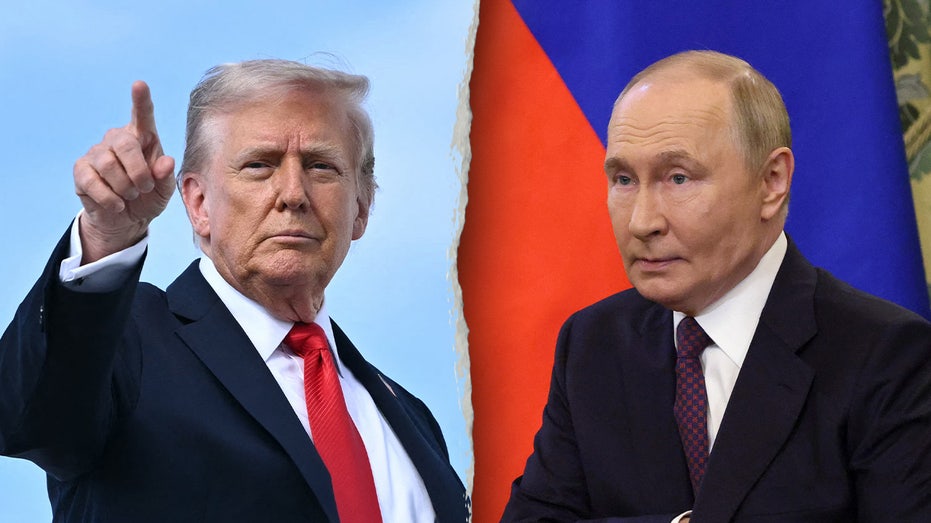
These are not isolated events, but connected parts of a strategic vise squeezing Russian power.
For more than a decade, Russia converted energy into leverage through access. Pipelines and long-term contracts gave Moscow influence inside European utilities and governments. Discounted crude layered on top of defense ties gave it relevance in India. Fuel networks helped keep clients like Venezuela and Cuba in the anti-Western column. The physical molecule mattered less than the political dependence it created. That conversion system is now being attacked on multiple fronts at once.
Trump moved early on buyers. In August 2025 he signed an executive order imposing additional 25% tariffs on India over its Russian oil purchases, pushing combined rates as high as 50% in some categories. He later stated publicly that Indian Prime Minister Modi had assured him India would stop buying Russian oil and that China would be next.
TANVI RATNA: HOW THE WAR IN IRAN REALIGNED EUROPE’S ENERGY FUTURE AROUND AMERICA
The signal was clear: Continued large-scale purchases carried direct economic costs. India has not abandoned Russian crude entirely, but it has become selective. The May 2026 rejection of the Portovaya LNG cargo showed the limit. Even with energy markets tight from the Iran war, Indian firms treated certain sanctioned Russian cargoes as carrying unacceptable compliance risk.
Europe has moved from crisis reduction to permanent legal exit. The December 2025 political agreement and the subsequent Regulation (EU) 2026/261 turned the break with Russian gas into binding law. Short-term Russian LNG imports face a ban from late April 2026. Short-term pipeline contracts end in mid-June 2026. The full phase-out of Russian gas is scheduled for September 2027. Russia’s share of EU gas imports had already collapsed from 45% before the full-scale Ukraine invasion to 12% by October 2025.
Specific infrastructure changes made the shift concrete. When Ukraine’s transit agreement expired on January 1, 2025, the old gas-electricity circuit into Moldova through Transnistria broke. Bulgaria had already taken control of the Rosenets terminal and ended Russian crude deliveries to its refinery. These are not reversible political decisions. They redesign the physical and legal map.
‘ONLY TRUMP CAN STOP RUSSIA’: MILLIONS FACE FREEZING WINTER, UKRAINE ENERGY EXECUTIVE WARNS
Inside Russia, production and processing capacity took direct hits. Ukrainian long-range drone strikes between January and May 2026 disabled around 700,000 barrels per day of refining across 16 facilities. Major sites including Tuapse, Syzran, Primorsk, Ust-Luga, Kirishi and Ryazan suffered fires, equipment damage and operational halts. Russian seaborne oil product exports fell sharply. Baltic port loadings dropped more than 30 percent in some periods as trade rerouted at higher cost and risk. Buyers now assess Russian supply not only for sanctions exposure but for physical reliability. The internal machine that turns crude into exportable products and domestic fuel has become less dependable.
The Iran war brought to light the fragility of reprieve that Russia has. Hormuz disruptions and related tensions drove oil and gas prices higher at points, giving Moscow revenue support on the volumes it could still sell. Washington, however, responded with conditional permission rather than open access. OFAC’s General License 134, issued in March 2026 and extended afterward, authorized delivery and sale only for Russian cargoes already loaded by specific cutoff dates. New production remained fully sanctioned. The tool allowed some flows when global markets needed supply, but the decision on which cargoes, which buyers and which dates rested with the United States. Energy scarcity became something Washington could manage through licenses rather than something Russia could exploit through volume.
The strategic depth and ability for Russia to project power on the outer edges also weakened. The January capture of Maduro removed a key partner and demonstrated Russia’s limited capacity or willingness to protect allies when its resources are committed elsewhere. Cuba’s fuel supplies came under visible strain, with only one Russian tanker permitted since December 2025 for humanitarian reasons amid widespread blackouts. The gray logistics networks Russia relied on after 2022 now face greater maritime enforcement and tariff pressure.
TANVI RATNA: EUROPE SAYS TRUMP MADE AMERICA UNRELIABLE. THE TRUTH IS TOUGHER
Alliance posture changes closed another lane. The 2026 U.S. National Defense Strategy shifted priorities toward homeland defense and China deterrence while stating that European allies should take primary responsibility for conventional defense on the continent and for supporting Ukraine. NATO has moved simultaneously to strengthen eastern flank planning and pre-position forces for the Baltics and neighbors. Putin faces a more capable deterrent on his western flank and less opportunity to exploit old divisions over American commitment.
Russia retains major buyers in China and continues selective sales to India. Some adaptations through alternative routes and shadow logistics persist. Higher energy prices tied to the Iran conflict provided genuine budgetary relief on sellable barrels. None of this restores the previous level of strategic freedom.
The old Russian position rested on the ability to convert hard assets into influence over governments that did not need to like Moscow in order to be constrained by its supply. That position is being compressed. Routes that once delivered access are becoming permissioned crossings. Internal capacity has been degraded. Key clients have been exposed. Buyers have grown more cautious. And the broader alliance map has hardened on the eastern flank while the United States reallocates its primary attention elsewhere.
Trump’s approach has not eliminated Russian energy from global markets. It has made turning that energy into dependable geopolitical leverage significantly more difficult across energy, finance, clients and alliances at the same time. Production continues. Easy strategic options do not.
CLICK FOR MORE FROM TANVI RATNA