
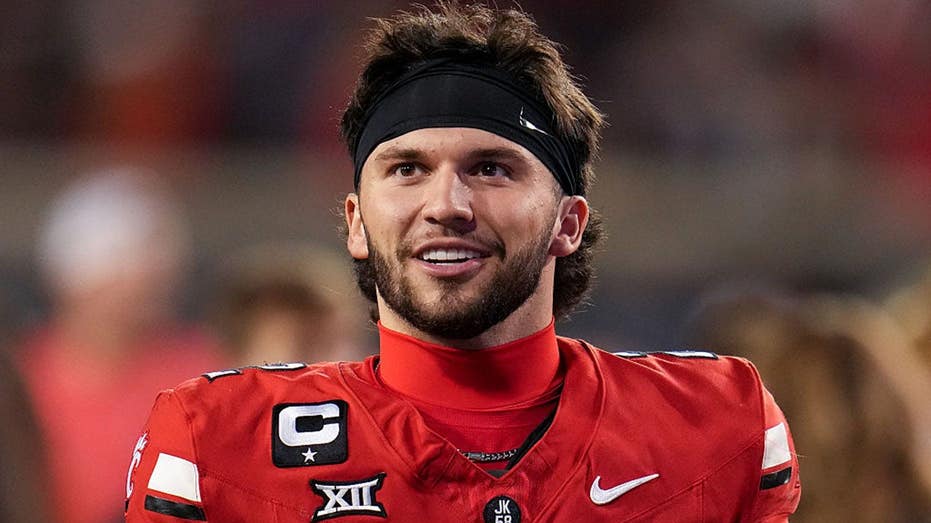
Brendan Sorsby has filed a lawsuit against the NCAA in hopes of a local judge granting an injunction that would allow him to play this season for Texas Tech, after admitting to gambling on games that involved a school he was enrolled at.
The complaint, filed on Monday, stems from an ongoing investigation into Sorsby for past gambling wagers he placed, which include his time playing for the Indiana Hoosiers.
“Mr. Sorsby is currently ineligible to play for Texas Tech due to prior violations of the NCAA’s sports gambling rules. Rather than support a student-athlete’s recovery from a gambling addiction, the NCAA has weaponized his condition to shore up a facade of competitive integrity,” the complaint reads.
Brendan Sorsby at crossroads: NCAA gambling probe could end Texas Tech QB’s college career
According to lawyers representing Sorsby, they asked the NCAA for a “reasonable discipline,” but not a full loss of eligibility at Texas Tech for the upcoming season. The NCAA did not want to negotiate with Sorsby, according to his lawyer, but rather stonewalled the process.
Sources tell OutKick that Texas Tech was made aware of the NCAA investigating its quarterback last month. Also, he placed nearly 10,000 bets over the years, most of them being small wagers on sports like the UFC, Romanian soccer, tennis, baseball and even the Nathan’s Famous Hot Dog Eating Contest.
But placing bets on college football would end up being the crux of where we are today. where we are today.
In his defense for an injunction, the attorney representing Sorsby pointed to the “facts,” as they perceive them.
“The facts are straightforward, Mr. Sorsby is a college quarterback who developed a gambling addiction. He bet on sports using only public information. He never bet against his own team or players on his team, never used or shared inside information, and never manipulated a game. The NCAA’s own robust, real-time integrity-monitoring systems confirm this.”
Hail Mary in Lubbock: Brendan Sorsby’s last shot at beating NCAA gambling allegations
However, Sorsby admits in his filing that he did place bets on his own team while at Indiana.
“Mr. Sorsby placed small bets — typically between $5 and $50 — in support of Indiana. In other words, he placed bets on Indiana to win or score more than a certain number of points or for the quarterback to throw for more than a certain number of touchdowns or yards. He rationalized these bets as a way to feel more connected to the team, rooting for his friends and feeling like he had a real “stake” in games despite being otherwise uninvolved.”
So, one of the defenses for the quarterback is that he was betting out of the goodness of his heart, and for the Hoosiers while he was on the scout team.
Attorneys noted that when he was named the backup quarterback in 2022, he did not wager on any games involving Indiana football.
We will see if a judge decides that this defense is strong enough to show sympathy for the ongoing gambling addiction, in his push for eligibility.
The NCAA has a strict policy on gambling, especially when it involves a player’s own team. Even though Sorsby was redshirting that season, and played in one game, this is obviously still against the rules.
“The NCAA has manufactured an impossible bind: it delays its reinstatement decision while the NFL deadline closes in, forcing Mr. Sorsby to choose between surrendering college eligibility he wants to retain, while risking the loss of a full year of competitive football entirely. This is not equity. Mr. Sorsby has diligently pursued every alternative avenue for relief, but he is not obligated to continue doing so in light of the irreparable harm he now faces. Only this Court can hold the NCAA to its own rules — and provide Mr. Sorsby and Texas Tech the timely relief they are owed.”
In a statement to OutKick, the NCAA says they have not received any notice from the Sorsby camp around reinstatement.
“The NCAA has not received a reinstatement request for this case. The NCAA generally doesn’t comment on pending reinstatement requests, but the Association’s sports betting rules are clear, as are the reinstatement conditions,” the organization noted. “When it comes to betting on one’s own team, these rules must be enforced in every case for the simple reason that the integrity of the game is at risk.
“Every sports league has these protections in place, and the NCAA will continue to apply them equally because every student-athlete competing deserves to know they’re playing a fair game.”
In reality, this move to sue the NCAA is Sorsby hoping to expedite this process and determine if he will be eligible in any way to play this upcoming season.
In his defense, Sorsby is claiming that his mental health condition is being used against him in this situation with the NCAA.
“The NCAA has refused to process his reinstatement request in a timely fashion as required by its own procedures, which typically call for review within 48 hours. The NCAA’s reasons have been pretextual. First, it demanded years of bank records, credit card statements, Venmo transactions, phone logs, text messages, and social media records and insisted on a live interview that would force Mr. Sorsby to interrupt residential treatment,” the complaint reads.
In their overwhelming argument, Sorsby is claiming the NCAA will suffer no harm in allowing the quarterback to play this season, and their tactics in stalling a decision will lead to further harm. The complaint states that Sorsby only has until June 22 to make a decision regarding the NFL Supplemental Draft, and the NCAA is dragging its feet in this process.
“The NCAA will suffer no cognizable harm from letting Mr. Sorsby play football while this case proceeds. But if this Court does not act, no future judgment can give Mr. Sorsby what the NCAA will have taken from him.”
Now, we will find out if a Lubbock judge decides that this is enough to grant an injunction, though this would set a wild precedent if Sorsby is allowed to play for Texas Tech in 2026.