
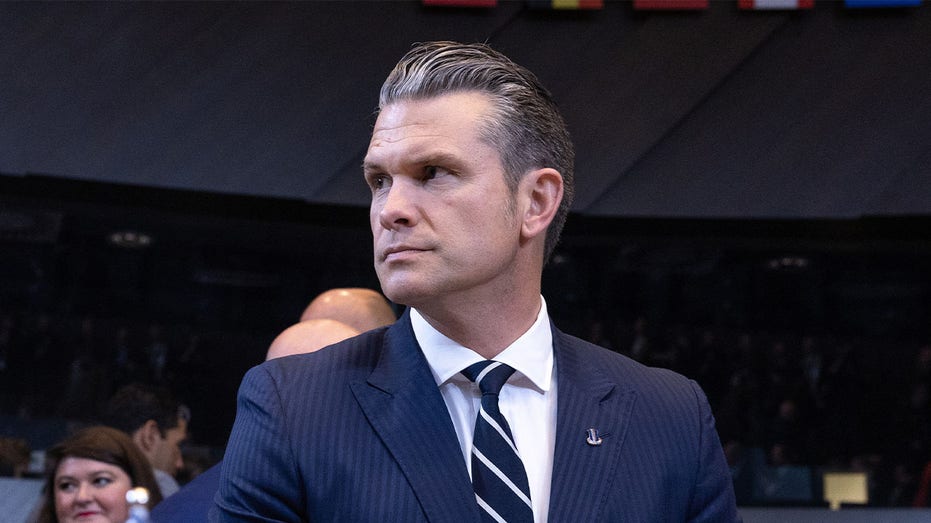
America is now consumed with allegations that, in early September, U.S. forces struck a suspected drug-trafficking vessel in the Caribbean — and then struck again to kill any survivors. Some in the media, led by the Washington Post, suggest that Secretary of War Pete Hegseth ordered a “kill-everyone” mission and that the Trump administration may have committed a war crime.
If true, such an act would violate the law of armed conflict — specifically the prohibition against targeting individuals who are hors de combat (out of the fight). But as of today, nothing close to definitive evidence has emerged. We are dealing with conflicting anonymous sources, evolving accounts, and intense political motivations.
And from where I sit — as someone who has conducted formal investigations for senior Pentagon leaders, spent a quarter of a century on the Army Staff in uniform and as a contractor, and attended countless high-level operational briefings — the story being told in some corners of the press does not pass doesn’t pass a basic plausibility test.
HEGSETH ERUPTS OVER WAPO ‘FAKE STORIES,’ VOWS TO STOP ‘POISONING OF THE AMERICAN PEOPLE’
Allegations vs. Facts: The Media’s Conflicting Narratives
The Washington Post claims two unnamed officials told them that Hegseth gave a verbal order on Sept. 2 to “kill-everybody” aboard the vessel, and later ordered a follow-on strike once survivors were spotted.
The Post’s headline read: “Hegseth order on first Caribbean boat strike, officials say: Kill them all.”
But The New York Times’ reporting directly contradicts this. According to five officials cited in a separate investigation, Hegseth did not order the killing of survivors, did not issue instructions about what to do if the initial strike failed and did not direct a follow-on strike after any drone imagery showed survivors.
These are not minor discrepancies. They represent two completely different realities:
One alleges a deliberate war crime directed from Washington.
The other describes a lawful maritime interdiction mission with a secondary strike authorized by the operational commander.
Right now, we don’t have sufficient evidence to sustain the former — only political pressure to believe the worst.
Why I’m Skeptical: Pentagon Reality vs. Media Fantasy
For 25 years, I served in the Pentagon, including investigative roles for some of the military’s highest leaders. I have participated in sensitive reviews, intelligence briefings, and decision-making sessions with four-star generals, service secretaries, and defense officials.
GOP FRACTURES OVER HEGSETH’S ‘DOUBLE-TAP’ CARIBBEAN STRIKE AS CONGRESS PROBES LEGALITY
Let me state plainly: I have never — not once — heard a senior Pentagon leader give an order that sounds remotely like what some media outlets are claiming. Not in wartime. Not in crisis. Not behind closed doors. Not ever.
The reason is simple. Every senior military and civilian leader knows:
Orders must be lawful.
Every action is reviewable by lawyers.
Targeting decisions undergo rigorous scrutiny.
Even more importantly, the sensitive meetings where life-and-death decisions are made — particularly those involving the Secretary of War — are conducted in the Tank, a highly secure conference room in the Pentagon’s Joint Chiefs of Staff area. It is deep in a restricted section of the building, inaccessible even to most military personnel, let alone journalists.
MARK KELLY PRESSED ON WHETHER HE WOULD REFUSE ORDERS IF HE WAS STILL IN UNIFORM
The idea that reporters have accurate second-by-second accounts of alleged verbal kill orders issued from inside the Tank, relayed through anonymous political sources months later, should make any serious observer pause. This isn’t how the Pentagon works. It’s how political narratives work.
War-Crime Talk Isn’t Oversight — It’s Politics
Sen. Mark Kelly, D-Ariz., is now publicly suggesting that the reported follow-on strike could constitute a war crime. Asked whether the alleged second strike on survivors “constitutes a war crime,” Kelly responded, “It seems to,” according to Colorado Politics.
Kelly is entitled to demand answers — oversight is Congress’s job. But raising the specter of war crimes before facts have been established is irresponsible and politically incendiary. It risks painting U.S. service members as executioners before investigations even begin.
And it ignores the broader legal and operational context: The president, under Article II, possesses inherent authority to defend the United States — including by interdicting vessels transporting lethal contraband such as fentanyl, which kills tens of thousands of Americans each year.
JOHNSON POINTS TO OBAMA-ERA DRONE PRECEDENT AS CONGRESS PROBES DEADLY CARIBBEAN STRIKE
The administration argues that these narco-trafficking vessels are not harmless fishing skiffs — they are instruments of transnational criminal networks and terrorists responsible for mass death in the United States. That does not excuse unlawful action. But it does explain the operational mindset: Stop the threat before it reaches American shores.
The Danger of Turning Every Strike into a War-Crime Allegation
If we continue down this road — where every high-risk interdiction is treated as a potential atrocity, every gray-zone strike becomes a political scandal, and every anonymous source becomes gospel — we will cripple America’s ability to act decisively.
Commanders will hesitate. Lawyers will override operators. Enemies will exploit our paralysis. And servicemembers will be left wondering whether defending the nation will one day place them at the center of a politicized media storm.
Oversight is essential. Reckless accusations are not.
What America Needs Now: Facts, Not Fury
Before any judgment is rendered, Congress and the Pentagon should:
*Release full, unredacted ISR imagery of the strike.
CLICK HERE FOR MORE FOX NEWS OPINION
*Publish the rules of engagement in effect on Sept. 2.
*Identify who issued the second-strike authority.
*Conduct a standard, apolitical investigation within the military chain of command.
Until then, we should resist the urge to believe in the most sensational version of events.
As someone who has spent decades inside the Pentagon’s highest decision-making rooms, I can tell you the media’s caricature of a secretary barking out unlawful kill orders simply does not reflect reality. It reflects politics.
And politicizing war-crime allegations is not just unfair — it’s dangerous.
CLICK HERE TO READ MORE FROM ROBERT MAGINNIS