
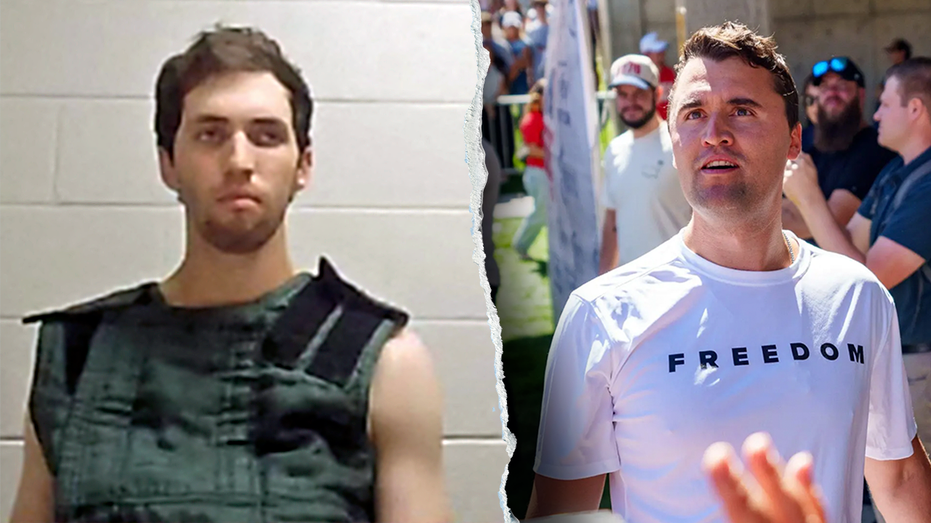
PROVO, Utah – The man accused of assassinating Turning Point USA founder Charlie Kirk is set to make his first in-person court appearance Thursday, nearly three months after he was taken into custody.
The hearing marks the most significant step in the case so far and comes amid growing concerns from media outlets and from Kirk’s widow about the increasing secrecy surrounding the proceedings.
Tyler Robinson, charged with aggravated murder and multiple related felonies in Kirk’s fatal shooting during a Sept. 10 event at Utah Valley University, has appeared via video or audio from jail in previous court hearings. Since then, much of the case has unfolded behind closed doors, prompting a coalition of media organizations, including Fox News, to demand greater transparency.
That coalition requested that prosecutors and defense attorneys be required to give advance notice whenever they seek to seal filings or restrict public access so that those limits can be challenged before taking effect.
ERIKA KIRK PUSHES BACK AT ONLINE CONSPIRACY THEORIES ABOUT HUSBAND’S DEATH
Legal analyst and California-based trial attorney Roger Bonakdar said the dramatic shift in transparency has been striking from the start.
“It has been pretty odd that the information tap was at full blast for a little while and now it’s completely shut off,” he said. “It’s really kind of inconsistent with how you see cases move forward typically.”
Bonakdar said authorities were unusually forthcoming early in the investigation, releasing details that prosecutors typically hold back.
ERIKA KIRK REJECTS ARGUMENT GUN VIOLENCE WAS THE ROOT PROBLEM THAT LED TO CHARLIE’S ASSASSINATION
“When they first arrested Tyler Robinson, the information tap was at full blast,” he said. “They told us that they had audio recordings from Tyler Robinson and a purported confession. They told us that there was video footage from a local fast food restaurant. They were very, very almost oversharing in the beginning.”
But he said that openness abruptly ended.
“Now they’ve shut that tap off and they’re saying you can’t even come to court and hear about what we’re doing when most of it’s probably procedural,” he continued.
WATCH: Prosecutors will use Robinson’s texts as confession to murder, attorney says
Because prosecutors proceeded by indictment rather than complaint, he noted, the public will not see a preliminary hearing, and substantive evidence may only emerge if the defense files certain motions months down the road.
The push for transparency intensified after both sides jointly moved to classify the audio and transcript from a closed Oct. 24 hearing as “private.” That session focused on courthouse-security questions and how Robinson should appear in court going forward.
Media organizations argued the public has a right to know when records are being sealed and to challenge those limitations in real time.
ONE MONTH AFTER CHARLIE KIRK’S MURDER, KEY QUESTIONS REMAIN UNANSWERED
Erika Kirk, Charlie Kirk’s widow, voiced concerns last month about the shrinking visibility around the case. She questioned why the suspect is being shielded from cameras when her husband was killed in front of a crowd.
“There were cameras all over my husband when he was murdered,” she told Fox News’ Jesse Watters in an exclusive interview. “There have been cameras all over my friends and family mourning. There have been cameras all over me, analyzing my every move, analyzing my every smile, my every tear. We deserve to have cameras in there.”
Bonakdar said her reaction is understandable, explaining, “Erika’s sentiments are readily understandable. She’s a grieving widow and, you know, our hearts all go out to her.”
JAIL’S TIGHT LEASH ON CHARLIE KIRK’S ALLEGED ASSASSIN ALL ABOUT ‘SAFETY,’ NOT SILENCING, EXPERT SAYS
At the same time, he said the court is under immense pressure given the political and national significance of the case.
“This process has become complicated because of how significant Charlie was,” he said. “This is a very politically charged case. There are very high emotions in this case. And there’s also issues of tainting the jury pool.”
He explained that judges must balance the First Amendment rights of the media with the need to preserve the integrity of the trial, saying, “Court proceedings are supposed to be open and public… but you do have some real issues with how the public is going to access this information as to the consequences for the integrity of the trial.”
The judge has ordered that Thursday’s hearing be held in person and open to the public as much as possible, although no details from the Oct. 24 proceeding may be disclosed. If the hearing transitions into a closed session, the media coalition’s attorney may remain in the courtroom but may not share any portion of the sealed discussion with any outlet or client.
The court has also imposed strict guidelines on how Robinson may be shown. He cannot be photographed or filmed in shackles and may only be depicted while seated. Images of his family members are prohibited, and reporters must comply with the court’s decorum order.
These restrictions mirror earlier rulings, including the postponement of a prior hearing after disputes over whether Robinson could appear in jail attire and how that might influence public perception.
ACCUSED CHARLIE KIRK ASSASSIN WANTS TO DITCH JAIL CLOTHES FOR UPCOMING COURT APPEARANCES
Bonakdar said such concerns are rooted in fairness.
“Courts oftentimes will prohibit the media from depicting the defendant in shackles or in jail clothing because it creates this inference of guilt,” he explained.
Appearing restrained, he said, can lead jurors to view a defendant as dangerous or guilty before any evidence is presented. Still, he noted the restrictions may have limited impact in such a widely covered case.
“Anybody who does a Google search will know… at some point it may be an exercise in futility. Is the damage already done?”
Robinson’s limited physical appearances have raised questions as well. Bonakdar said the most likely explanation for keeping him on video is security.
“They’re gonna say that Tyler Robinson is a security risk… he’s at risk for being hit by someone who wants to seek revenge,” he said. While he acknowledged the reasoning, he added that it is “very clearly a deviation from the norm.”
WATCH: Street clothes at center of Tyler Robinson court case
Despite public frustration with the pace of the case, Bonakdar said the timeline is typical for a homicide case, particularly one in which prosecutors intend to seek the death penalty.
“The timing of the case is actually very consistent with the severity of the allegation,” he said. Murder cases “move very slowly,” he added, especially when prosecutors proceed by indictment rather than complaint.
He said Thursday’s hearing will be narrow in scope but significant.
“It’s going to be somewhat of a one-trick pony,” he said. “It’s going to be about this prior sealing order.”
The court, he said, set the hearing “specially” to address media objections claiming the secrecy violates First Amendment protections.
Whether Thursday’s proceeding brings clarity or adds more restrictions remains to be seen, but Bonakdar noted that the public deserves to understand at least the procedural posture of the case as it moves slowly toward trial, which he cautioned could still be a year or more away.